
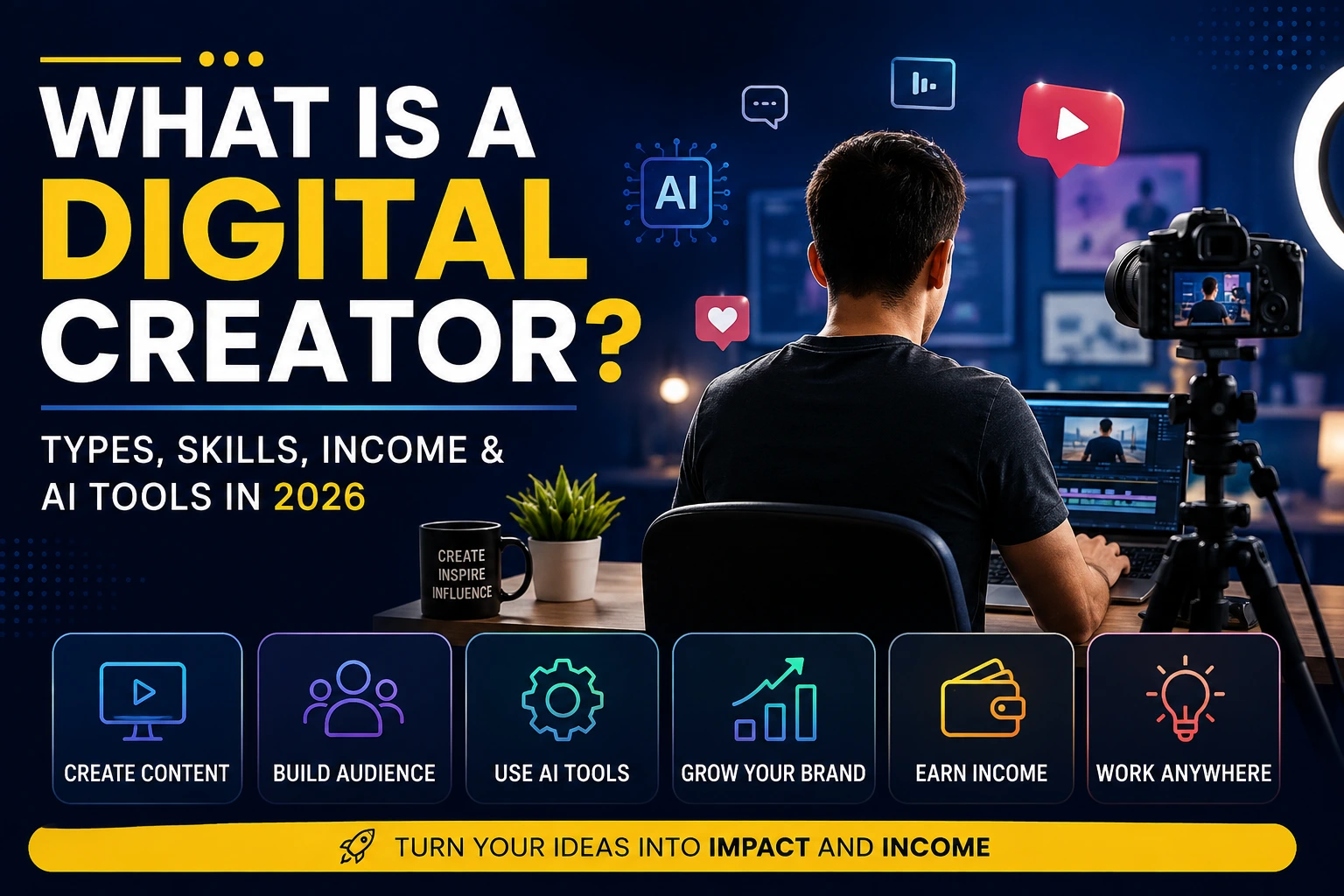
What is a digital creator? A digital creator is someone who creates and publishes original content using digital platforms, tools, and technology to reach an online audience.
Digital creators can make videos, write blog posts, publish social media content, create photos and graphics, record podcasts, build online courses, send newsletters, or develop other forms of digital media.
But being a digital creator is much more than simply posting on Instagram or TikTok. Today, creators can build personal brands, attract loyal communities, work with businesses, sell digital products, earn advertising revenue, and turn their creative skills into a full-time business.
And in 2026, artificial intelligence is changing the creator economy even further. AI tools can help with research, writing, image generation, video editing, SEO, captions, transcription, and many other repetitive tasks.
In this guide, you’ll learn exactly what a digital creator is, what digital creators do, the different types of creators, how they make money, which skills they need, how AI is changing content creation, and how you can become a digital creator yourself.
What Is a Digital Creator?
A digital creator is a person who creates and publishes content through digital platforms for an online audience.
The content can be educational, entertaining, informative, inspirational, commercial, or a combination of several types.
A digital creator might publish content on:
- YouTube
- TikTok
- A personal blog or website
- Podcasts
- Email newsletters
- Online communities
The format can also vary significantly.
For example, a digital creator may produce:
- YouTube videos
- Short-form videos
- Blog articles
- Social media posts
- Photography
- Digital illustrations
- Podcasts
- Newsletters
- Online courses
- Tutorials
- Reviews
- Ebooks
- Digital products
Simple Digital Creator Definition
A digital creator is someone who uses digital tools and platforms to create, publish, and distribute content to an online audience.
You don’t need millions of followers to qualify as a digital creator.
Someone who publishes useful photography tutorials to a small but engaged audience is a digital creator. A blogger who writes about AI software is also a digital creator. So is a YouTuber teaching people how to edit videos.
The size of the audience doesn’t define the creator. The creation and distribution of digital content do.
What Does a Digital Creator Do?
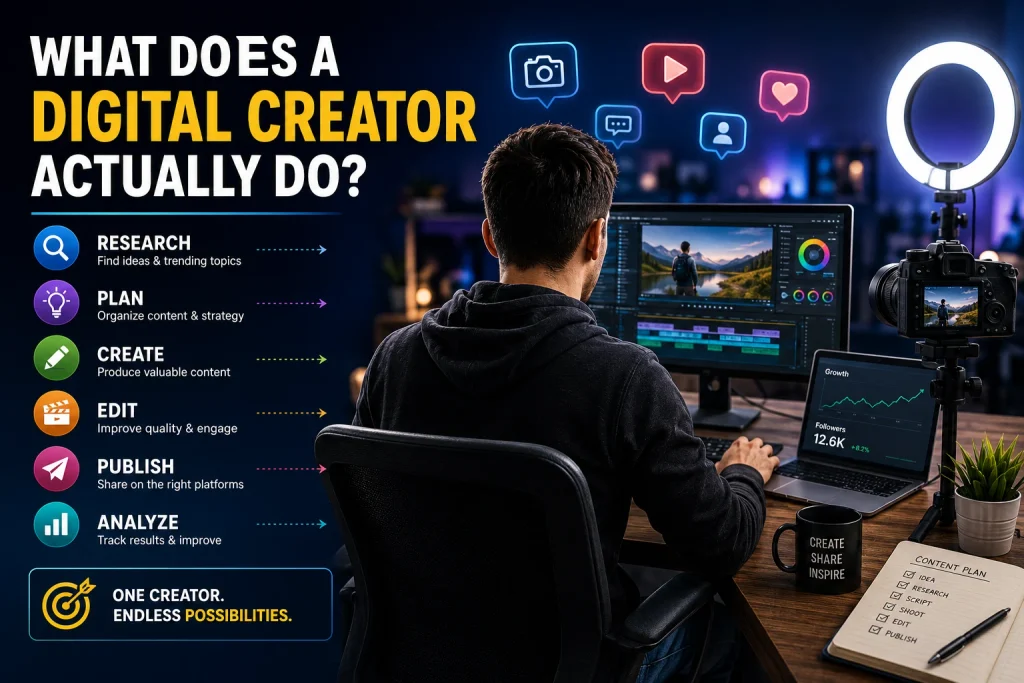
The exact responsibilities of a digital creator depend on their niche, platform, and business model.
However, most successful creators work through several stages.
1. Research Content Ideas
Before creating anything, creators need to understand what their audience actually wants.
They may research:
- Search queries
- Audience questions
- Competitor content
- Trending subjects
- Industry developments
- Social media conversations
- Popular videos
- Content gaps
For example, an AI-focused creator might discover that people are searching for the best AI tools for small businesses.
That single idea could become:
Blog post → YouTube video → Short video → Instagram carousel → Newsletter
This is called content repurposing, and it allows creators to get more value from one original idea.
2. Plan the Content
Good creators usually don’t publish completely random content.
They may create:
- Content calendars
- Video scripts
- Article outlines
- Storyboards
- Social media plans
- Keyword lists
- Topic clusters
Planning makes it easier to maintain consistency.
3. Create the Content
This is the creative stage.
Depending on the creator, it could involve:
- Writing
- Recording
- Photography
- Designing
- Editing
- Screen recording
- Voiceover
- Illustration
- Research
- Interviewing
The goal is to transform an idea into something useful or entertaining for the audience.
4. Edit and Improve It
The first version is rarely the final version.
Creators may edit:
- Video
- Audio
- Images
- Headlines
- Articles
- Captions
- Thumbnails
- Graphics
Editing is often what separates an average piece of content from a professional one.
5. Publish and Distribute
Creating good content isn’t enough if nobody sees it.
Creators need to distribute their work through the platforms where their audience spends time.
A creator might publish:
Long-form article → Google
Video → YouTube
Short video → TikTok / Instagram
Professional post → LinkedIn
Visual content → Pinterest
6. Engage With the Audience
Digital creation isn’t only about publishing.
Creators often:
- Answer comments
- Respond to questions
- Ask for feedback
- Run polls
- Start discussions
- Build communities
- Communicate through email
Audience interaction can help creators understand what people actually need.
7. Analyse Performance
Successful creators don’t simply publish and forget.
They study their data.
For example, YouTube Studio provides reports covering areas such as reach, engagement, audience behaviour, content performance, and revenue.
Creators can use this information to answer questions such as:
- Which topics perform best?
- Which titles attract clicks?
- Which videos retain viewers?
- Where are viewers coming from?
- What content should I create next?
This creates a continuous cycle:
Create → Publish → Measure → Learn → Improve → Create again
Types of Digital Creators
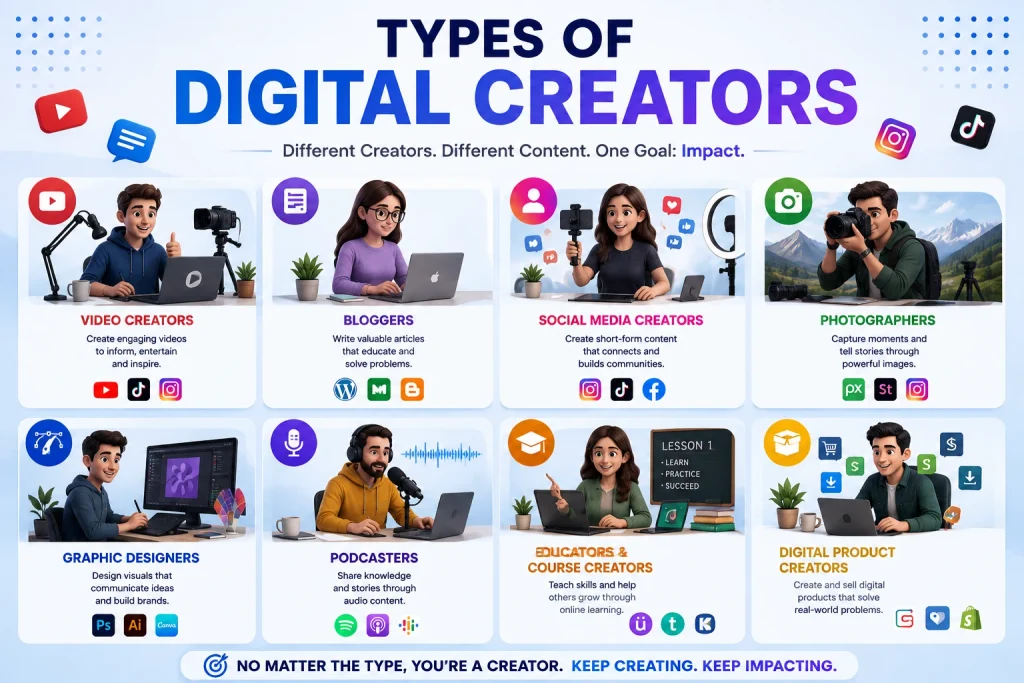
There are many different types of digital creators. You don’t have to fit into only one category.
1. Video Creators
Video creators produce content primarily through video platforms.
Examples include:
- YouTube creators
- TikTok creators
- Instagram creators
- Educational channels
- Review channels
- Tutorial creators
- Vloggers
Video creators can earn through advertising, sponsorships, affiliate marketing, products, memberships, and services.
2. Bloggers
Bloggers create written content and publish it on websites.
Common blogging niches include:
- Technology
- AI
- Business
- Finance
- Education
- Food
- Travel
- Photography
- Software
A blogger can build traffic from search engines, social media, email, and referrals.
Blogging can also be combined with other formats.
For example:
Article → YouTube video → Short → Newsletter
This makes blogging particularly powerful for creators who want to build an owned website.
3. Social Media Creators
Social media creators primarily publish content on social platforms.
Their content may include:
- Reels
- Short videos
- Carousels
- Stories
- Educational posts
- Product recommendations
- Commentary
- Tutorials
The key advantage is direct access to an existing audience on large platforms.
The downside is that creators are dependent on platform algorithms and policies.
4. Photographers
Digital photographers create visual content for online audiences or commercial clients.
They can work in areas such as:
- Portrait photography
- Product photography
- Travel photography
- Stock photography
- Food photography
- Commercial photography
Some photographers also sell presets, courses, prints, or digital assets.
5. Graphic Designers
Graphic designers create visual digital content such as:
- Logos
- Social media graphics
- Presentations
- Advertisements
- Infographics
- Illustrations
- Website visuals
AI-assisted design tools are increasingly becoming part of this workflow.
6. Podcasters
Podcasters create audio programmes around specific topics.
A podcast might cover:
- Technology
- Business
- News
- Education
- Entertainment
- Personal development
- Entrepreneurship
Podcasters can also repurpose episodes into articles, short videos, social posts, and newsletters.
7. Educators and Course Creators
Some digital creators turn their knowledge into educational products.
They may create:
- Online courses
- Tutorials
- Workshops
- Ebooks
- Paid communities
- Memberships
- Educational newsletters
This model can be especially powerful when the creator has specialised expertise.
8. Digital Product Creators
Digital creators can also create products rather than relying entirely on advertising.
Examples include:
- Templates
- Design assets
- Prompt packs
- Notion templates
- Ebooks
- Presets
- Courses
- Spreadsheets
- Software
- Memberships
This can create a direct relationship between the creator and the customer.
Digital Creator vs. Content Creator: What’s the Difference?
Digital creator and content creator are often used to describe the same type of person.
There is, however, a slight difference in emphasis.
A content creator is generally focused on producing content for an audience.
A digital creator is a broader term that emphasises the use of digital platforms and technology to create and distribute that content.
| Digital Creator | Content Creator |
|---|---|
| Broad digital-focused term | Broad content-focused term |
| Uses digital platforms and tools | Focuses on producing content |
| Can include bloggers, designers, educators and creators | Often associated with online and social content |
| Can build a digital business | Can focus primarily on audience growth |
| May work across several digital formats | Can specialise in one content format |
In everyday use, there is significant overlap between the two terms.
How Do Digital Creators Make Money?
Creating an audience is only one part of the creator economy.
Creators can monetise their skills and audience in several different ways.
1. Advertising
Some creators earn money through advertising displayed around their content.
This can include:
- Website advertising
- Video advertising
- Platform monetisation programmes
However, advertising revenue depends on factors such as audience size, location, niche, traffic quality, and advertiser demand.
2. Affiliate Marketing
Affiliate marketing allows creators to recommend products or services and potentially earn a commission when users make qualifying purchases through their links.
This can work particularly well for creators who publish:
- Software reviews
- Product comparisons
- Tutorials
- Buying guides
- “Best tools” articles
For example, an AI creator could compare several AI writing platforms and provide useful information that helps readers decide which product fits their needs.
If a creator has a financial or other material relationship with a brand, appropriate disclosure is important. The U.S. Federal Trade Commission advises influencers to clearly disclose material connections such as payments or free products.
3. Sponsorships
Brands can pay creators to feature or promote their products.
Sponsorship opportunities can depend on:
- Audience size
- Audience relevance
- Engagement
- Content quality
- Niche
- Creator reputation
A smaller creator with a highly relevant audience can sometimes be more useful to a specialised brand than a much larger general-interest account.
When creators have a material connection with a brand, disclosures should be clear and easy for viewers to notice.
4. Selling Digital Products
Creators can sell products such as:
- Ebooks
- Templates
- Courses
- Presets
- Prompt collections
- Design assets
- Checklists
- Spreadsheets
- Memberships
The major advantage is that digital products can often be created once and sold repeatedly.
5. Freelance Services
A creator can turn their skills into services.
For example:
Writer → Copywriting
Designer → Graphic design
Video creator → Video editing
SEO creator → SEO consulting
Photographer → Photography services
Content can therefore become a way to demonstrate expertise and attract clients.
6. Memberships and Subscriptions
Creators can offer premium experiences to paying members.
Examples include:
- Exclusive videos
- Private communities
- Premium newsletters
- Courses
- Tutorials
- Behind-the-scenes content
- Members-only resources
This can create recurring revenue rather than relying entirely on individual transactions.
What Skills Does a Digital Creator Need?
You don’t need to master every skill before starting.
However, developing the following abilities can make a major difference.
Content Creation
You need to know how to turn ideas into useful content.
Communication
Great creators can explain ideas clearly and make complicated topics easier to understand.
Storytelling
Even educational content can benefit from a strong narrative.
Basic Design
Understanding visual hierarchy, typography, spacing, and composition can make content more professional.
Video Editing
Video is important across many platforms, making basic editing skills increasingly valuable.
SEO
If you create websites, blogs, or YouTube content, understanding search intent and optimisation can help people discover your work.
Google’s Search Essentials recommends creating helpful, reliable, people-first content and using words that people actually use when searching in appropriate parts of a page.
Social Media Marketing
Creators need to understand how different platforms distribute content and how audiences interact with them.
Analytics
Data helps creators identify what works and what doesn’t.
Adaptability
Digital platforms constantly evolve. Creators who are willing to learn and experiment have an advantage.
How AI Is Changing Digital Creation in 2026
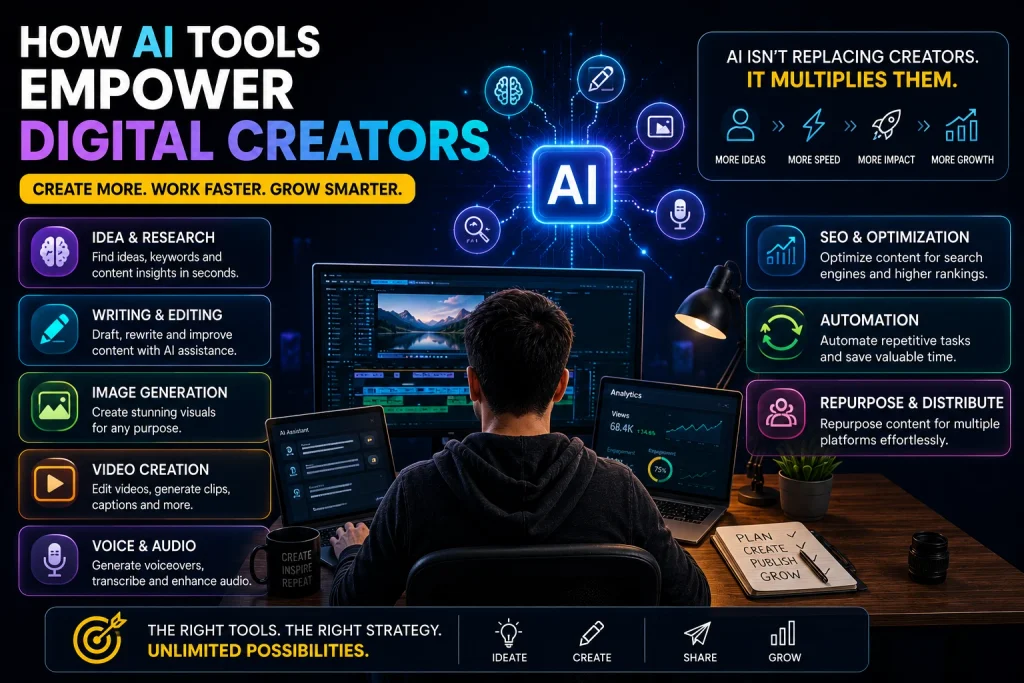
Artificial intelligence has become an important part of the modern creator toolkit.
AI can assist with:
- Brainstorming
- Research
- Writing
- Editing
- Image generation
- Video production
- Voiceovers
- Transcription
- SEO research
- Captions
- Content repurposing
- Productivity
But there’s an important distinction:
AI should improve the creative process, not replace originality and judgement.
Google’s current guidance says generative AI can be useful for researching topics and adding structure to original content, but generating many pages without adding value can violate its spam policies.
Google also states that its systems aim to reward original, high-quality, people-first content regardless of how it was produced.
AI Tools for Digital Creators
Different creators need different tools.
AI Writing Tools
Useful for:
- Brainstorming
- Outlining
- Editing
- Rewriting
- Drafting
- Summarising
But creators should still fact-check information and add original expertise and experience.
AI Image Tools
Useful for:
- Blog illustrations
- Social media graphics
- Concept art
- Thumbnails
- Marketing visuals
- Background generation
AI Video Tools
AI can assist with:
- Script creation
- Captions
- Editing
- Background removal
- Voiceovers
- Short-form video
- Video generation
AI SEO Tools
Creators can use AI-assisted SEO tools to help with:
- Keyword research
- Search intent
- Content outlines
- Topic clusters
- Title ideas
- Meta descriptions
- FAQ ideas
The important thing is to use these tools as assistance rather than publishing generic AI content at scale.
AI Research Tools
Research-focused AI tools can help creators:
- Explore unfamiliar topics
- Find relevant information
- Summarise research
- Organise ideas
- Compare information
For factual topics, important claims should still be checked against reliable primary sources.
Best AI Workflow for a Digital Creator
Instead of asking AI to create everything from beginning to end, a better workflow is:
Step 1 — Human Idea
Choose the topic based on your audience.
Step 2 — AI-Assisted Research
Use AI to explore questions, angles, and subtopics.
Step 3 — Human Expertise
Add your own experience, examples, opinions, testing, or analysis.
Step 4 — AI Assistance
Use AI for repetitive tasks such as editing, transcription, captions, or restructuring.
Step 5 — Human Review
Check:
- Accuracy
- Originality
- Tone
- Facts
- Links
- Examples
- Claims
Step 6 — Publish
Turn the final content into the appropriate format.
Step 7 — Analyse
Study performance and use the results to improve your next piece.
This approach keeps the creator at the centre of the process.
How to Become a Digital Creator
You don’t need expensive equipment or a huge following to start.
Step 1: Choose a Niche
Choose a subject you can consistently create content about.
Examples:
- AI
- Technology
- Business
- Photography
- Gaming
- Education
- Fitness
- Finance
- Food
- Productivity
A focused niche makes it easier to understand your audience and develop relevant content.
Step 2: Define Your Audience
Ask yourself:
- Who am I helping?
- What problems do they have?
- What questions do they ask?
- What are they trying to achieve?
- What information are they searching for?
The clearer your audience, the easier it becomes to create useful content.
Step 3: Choose One Primary Platform
Don’t try to dominate every platform on day one.
Choose the platform that fits your strengths.
If you like writing:
Start with a blog.
If you like long-form video:
Start with YouTube.
If you prefer short videos:
Try TikTok, Instagram, or YouTube Shorts.
If you’re focused on professional topics:
Consider LinkedIn.
You can expand to other platforms once you develop a reliable content system.
Step 4: Create a Content Strategy
Instead of asking:
“What should I post today?”
Create content categories.
For an AI creator, these could be:
AI Tools
AI Tutorials
AI News
AI Productivity
AI for Business
AI for Creators
This makes it easier to build topical authority and maintain consistency.
Step 5: Create Consistently
You don’t have to publish every day.
Consistency means having a realistic schedule you can maintain.
For example:
1 detailed article per week
plus
2–3 short social posts
can be better than publishing ten pieces one week and disappearing for a month.
Step 6: Focus on Value
Ask yourself before publishing:
“What will the reader or viewer gain from this?”
Good content should help people:
- Learn something
- Solve a problem
- Save time
- Make a decision
- Avoid a mistake
- Discover something useful
- Be entertained
Step 7: Study Your Analytics
After you’ve published enough content, look for patterns.
Which topics attract the most visitors?
Which videos get the best engagement?
Which pages generate clicks?
Which topics bring returning visitors?
Use those insights to improve your strategy.
How Much Does It Cost to Become a Digital Creator?
The answer depends on your niche.
You can start with very little.
Basic Setup
- Smartphone
- Internet connection
- Free editing software
- Free design tools
- Social media account
More Advanced Setup
As you grow, you might invest in:
- Camera
- Microphone
- Lighting
- Premium editing software
- AI subscriptions
- SEO software
- Website hosting
Don’t spend heavily before proving that your content idea and audience are working.
Do You Need Thousands of Followers to Become a Digital Creator?
No.
Follower count is only one metric.
A creator with 2,000 highly relevant followers may have a valuable audience if those people actively trust their recommendations.
For example, a creator specialising in AI software could build a relatively small but commercially valuable audience interested in:
- AI tools
- Software
- Automation
- Productivity
- Business technology
That audience could support:
- Affiliate marketing
- Sponsorships
- Consulting
- Digital products
- Advertising
The goal shouldn’t simply be:
Get more followers.
A better goal is:
Build the right audience and provide enough value that they want to stay.
Digital Creator vs. Influencer
These terms are also related but aren’t identical.
A digital creator focuses primarily on creating content.
An influencer is generally someone whose audience relationship gives them the ability to influence opinions, behaviour, or purchasing decisions.
A person can be both.
For example:
A YouTube creator who reviews AI software is a digital creator.
If that creator’s recommendations influence viewers’ software purchases, they can also function as an influencer.
Is Being a Digital Creator a Real Career?
Yes, digital creation can become a legitimate career and business model.
However, it isn’t guaranteed income.
A successful creator typically combines:
Content + Audience + Distribution + Trust + Monetisation
The strongest creators don’t depend on a single platform or revenue stream.
For example:
Website
↓
Search traffic
↓
Email audience
↓
Social media
↓
Affiliate revenue
↓
Digital products
↓
Sponsorships
This creates a more diversified creator business.
Common Mistakes New Digital Creators Make
Creating Content for Everyone
Broad content often becomes generic.
Chasing Every Trend
Not every trend is relevant to your audience.
Focusing Only on Followers
Audience quality and engagement can matter more than raw numbers.
Publishing Without a Strategy
Random publishing makes growth harder to analyse.
Copying Other Creators
Study successful creators, but develop your own perspective.
Depending Entirely on AI
AI can accelerate production, but it shouldn’t become an excuse for generic or inaccurate content.
Ignoring Analytics
Your audience data can tell you what to create next.
Trying Too Many Platforms Too Early
Master one platform before expanding your workflow.
A Simple Digital Creator Business Model
Here’s an example of how a creator could turn content into a business:
1. Create Free Content
Publish useful articles, videos, or social media posts.
↓
2. Build an Audience
Give people a reason to follow or subscribe.
↓
3. Build Trust
Provide accurate, useful, consistent information.
↓
4. Introduce Relevant Products
Recommend tools or products that genuinely fit the audience.
↓
5. Monetise
Potential revenue streams include:
- Advertising
- Affiliate marketing
- Sponsorships
- Services
- Courses
- Digital products
- Memberships
↓
6. Reinvest
Use revenue to improve:
- Content
- Equipment
- Software
- Research
- Distribution
This creates a sustainable creator ecosystem.
Frequently Asked Questions About Digital Creators
What is a digital creator?
A digital creator is someone who creates and publishes content using digital platforms and technologies for an online audience.
What does a digital creator do?
A digital creator researches ideas, plans content, creates and edits it, publishes it online, engages with an audience, and analyses performance.
What is a digital creator on social media?
A social media digital creator produces content specifically for platforms such as Instagram, TikTok, Facebook, YouTube, or LinkedIn.
What is the difference between a digital creator and a content creator?
The terms are very similar. Content creator focuses on the creation of content, while digital creator is a broader term that emphasises digital platforms and technology.
How do digital creators make money?
They can earn through advertising, affiliate marketing, sponsorships, digital products, memberships, courses, subscriptions, and freelance services.
Can I become a digital creator without showing my face?
Yes. Many creators produce faceless content using screen recordings, animations, graphics, voiceovers, tutorials, articles, or narrated videos.
Can AI help digital creators?
Yes. AI can assist with research, writing, editing, images, video, captions, transcription, SEO, and content repurposing. However, creators should still add original value and review AI-assisted content for accuracy and quality.
Do digital creators need expensive equipment?
No. Many creators can start with a smartphone, basic software, and an internet connection.
How many followers do I need to become a digital creator?
There is no minimum follower requirement. You can start creating with zero followers and build your audience over time.
Is digital creation a good career in 2026?
It can be, but success usually requires consistent content, a clear niche, audience trust, distribution, and a sustainable monetisation strategy.
Final Thoughts: What Is a Digital Creator?
So, what is a digital creator?
A digital creator is someone who uses digital technology and platforms to create, publish, and distribute content to an online audience.
That could mean writing articles, producing YouTube videos, creating TikToks, designing graphics, recording podcasts, teaching online courses, or building digital products.
The creator economy has also become more accessible because technology has reduced many of the barriers that once made content production expensive or technically difficult.
AI is accelerating this change by helping creators with research, writing, design, video, audio, SEO, and repetitive production tasks.
But technology alone doesn’t create a successful creator.
The strongest foundation remains:
Useful ideas → Original content → Audience trust → Consistency → Smart distribution → Sustainable monetisation
If you’re starting today, don’t wait until you have perfect equipment or thousands of followers.
Choose a niche, understand your audience, create something genuinely useful, publish consistently, study your results, and improve.
That’s how you move from simply creating content to building a real digital creator business.
Related Resources
For creators who want to improve their content and SEO, Google’s official documentation recommends focusing on helpful, reliable, people-first content rather than creating pages primarily to manipulate search rankings.
Google also explains that AI can be used as part of content creation, but the focus should remain on accuracy, quality, relevance, and adding value for users.
For sponsored content and brand relationships, creators can consult the Federal Trade Commission’s official guidance on social media disclosures.
[…] What Is a Digital Creator? Definition, Types, Skills, Income & AI Tools in 2026 […]